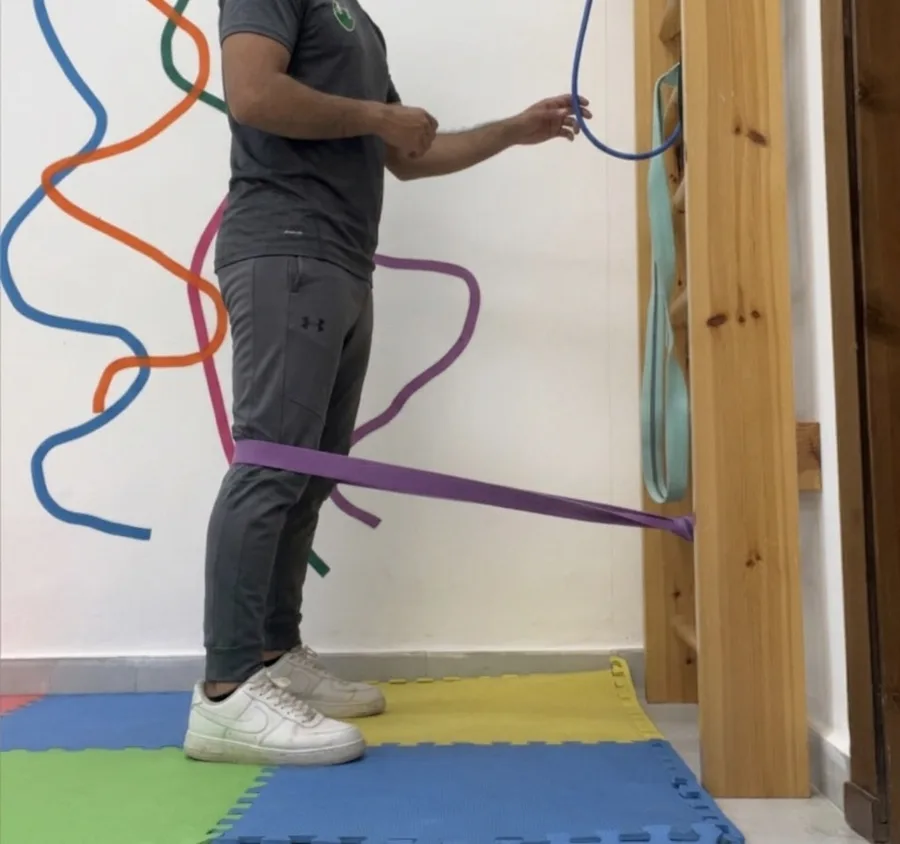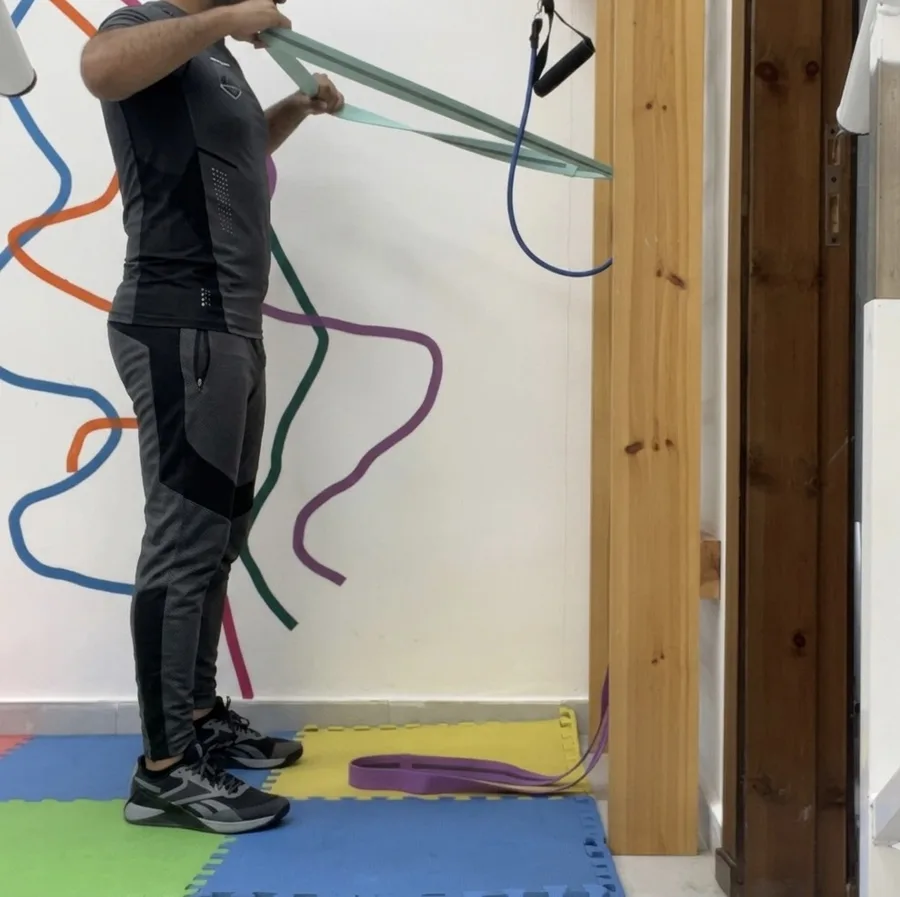
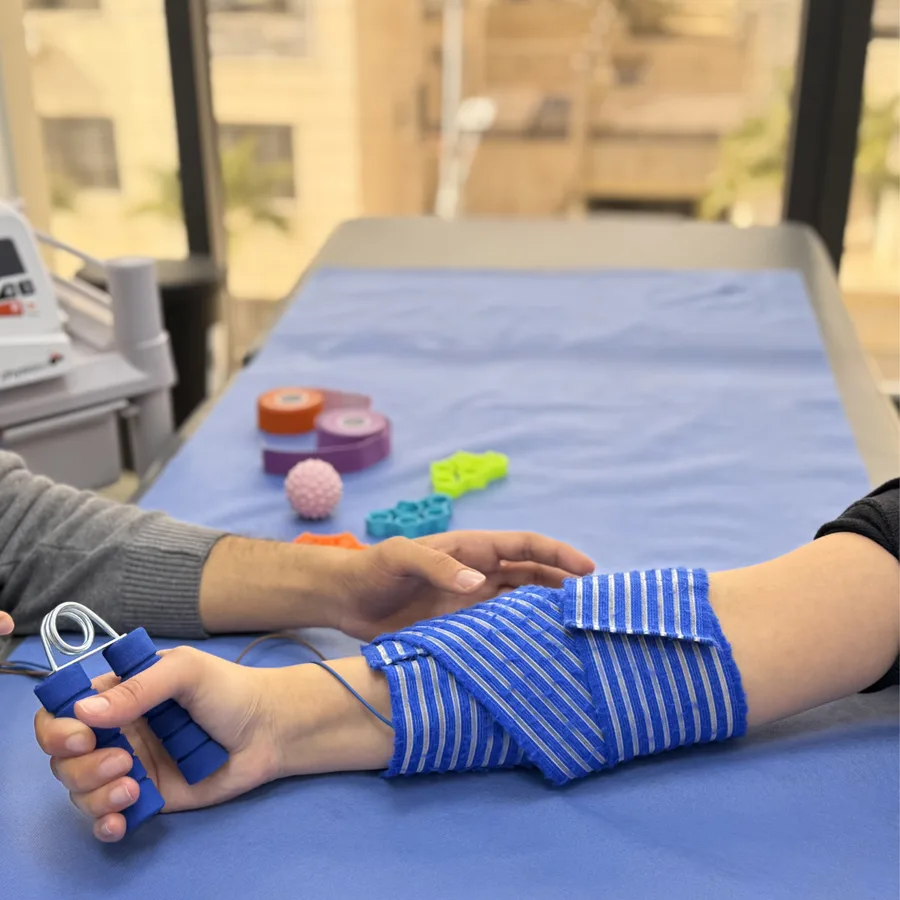
What is shoulder impingement?
Shoulder impingement is a condition in which some of the tissues around the shoulder joint get squeezed or rub during movement — especially the tendons and the small fluid-filled sacs (bursae) that reduce friction inside the joint.
The term shoulder impingement syndrome describes the group of problems that come with it: shoulder pain, inflammation, swelling, difficulty moving the arm, and irritation of the tendons or bursae around the joint. Pain is usually worse when you lift your arm, especially overhead, and it can affect daily activities and sleep.
Causes and types
- Rotator cuff tendinitis: the rotator cuff is a group of muscles and tendons that stabilise and move the shoulder. When these tendons are irritated or overloaded they can swell, causing pain and friction as the shoulder moves.
- Bursitis: the bursa is a small fluid-filled sac that reduces friction between tendons and bone. When it becomes inflamed and swollen, friction and pressure inside the shoulder increase.
- The shape of the bone at the top of the shoulder: this bone varies from person to person and is sometimes curved or hooked, increasing friction against the shoulder tendons. This can be present from birth, or bone spurs can develop with age.
Is impingement the same as frozen shoulder?
No. They are two different conditions, even though some symptoms overlap:
- Shoulder impingement: tendons or tissues around the shoulder are squeezed or rub during movement. Pain typically appears when you raise your arm, especially overhead.
- Frozen shoulder: the tissues around the joint become inflamed and stiff, causing marked pain and loss of movement — whether you move the arm yourself or someone else tries to move it for you.
Impingement is not a stage of frozen shoulder, although some people do have shoulder stiffness alongside impingement.
Symptoms
- Pain when lifting the arm: a sharp pain, pressure or pinching feeling as you raise your arm — particularly between about 60 and 120 degrees — or reach overhead.
- Pain spreading down the upper arm: starting at the front of the shoulder and spreading to the outer side of the upper arm.
- Night pain: worse when lying down or sleeping on the affected shoulder, which can disturb sleep.
- Weakness: the shoulder feels weak or tired when lifting objects or holding the arm away from the body.
- Difficulty with daily movements: reaching behind your back, getting dressed, brushing your hair or putting things on a high shelf.
- Clicking or grinding: popping sounds or a rubbing sensation as the shoulder moves.
What causes it or makes it worse?
- Overuse: repeated arm movements, especially overhead, in sport or at work, strain and irritate the shoulder tendons.
- Too little movement: not using the shoulder for long periods weakens the muscles — especially when followed by sudden heavy use.
- Poor posture: sitting for long periods with the back and shoulders rounded forward changes how the shoulder moves and loads its tissues.
- Abnormal shoulder-blade movement: when the shoulder blade doesn't move as it should, the joint is affected and pressure on the tendons increases.
- Injury: falls or direct blows can inflame and swell the tissues around the joint.
Prevention
- Warm up before sport and stretch afterwards
- Avoid excessive repetitive overhead movements
- Keep good posture when sitting and working
- Strengthen the shoulder muscles and the muscles around the shoulder blade
- Use correct technique in resistance training and avoid sudden jumps in weight or intensity
- Keep a healthy weight and an active lifestyle
How is it diagnosed?
Diagnosis usually starts with a clinical examination. A doctor or physical therapist assesses where the pain is and what it feels like, your range of movement and strength, which movements increase the pain, and how it affects your daily life — and asks about your work, sport and hobbies.
In some cases a doctor may order imaging:
- X-ray: to assess the bones and the shape of the shoulder joint.
- MRI: to look at the tendons and surrounding tissues.
- Ultrasound: to assess tendons and soft tissues during movement.
These tests help rule out other causes of shoulder pain, such as tendon tears or shoulder arthritis.
Treatment
Treatment depends on the cause, how severe the symptoms are and your overall condition. It usually starts without surgery:
- Activity modification: reduce the activities that increase pain — especially repetitive or overhead movements — while keeping the shoulder moving and avoiding immobilising it for long periods.
- Physical therapy: to reduce pain, restore movement, strengthen the muscles and improve how the shoulder moves in everyday tasks.
- Cold packs: to ease pain and swelling — never apply ice directly to the skin.
- Pain relief and anti-inflammatories: after advice from a doctor or pharmacist, especially for longer-term use or if you have other conditions or take other medicines.
- Injections: a doctor may sometimes recommend an anti-inflammatory injection around the shoulder.
- Surgery: considered when other treatments haven't helped, or when there is a problem that needs surgical repair — decided by a doctor based on examination and imaging.
The role of physical therapy
Physical therapy is a core part of non-surgical treatment for impingement. The goal is to restore shoulder movement and strength and get you safely back to your activities. It includes:
- Assessment: pain, range of movement, muscle strength, how the shoulder moves, and how the problem affects your day.
- Pain relief: using suitable methods such as cold or heat depending on the stage.
- Restoring movement: with appropriate mobility and stretching exercises to reduce stiffness.
- Strengthening: with particular focus on the rotator cuff and the muscles around the shoulder blade to improve stability and control.
- Posture: better positions when sitting, working and during daily activities.
- Manual therapy: joint or soft-tissue mobilisation when appropriate.
- Gradual return to activity: back to work or sport without sudden spikes in load.
- Home exercises: a program you continue at home to keep your progress.
Stages of rehab
Rehab usually progresses according to your pain, movement and strength, in three broad stages:
Stage 1: Reduce pain and restore movement
- Modify the activities that cause pain
- Gentle movement within a comfortable range, including pendulum exercises
- Gentle stretches
- Cold or heat as appropriate
Stage 2: Strength and control
- Internal and external rotation exercises
- Rotator cuff strengthening
- Shoulder-blade stabilisation exercises
- Safe, gradual arm-raising
- Light resistance, increased step by step
Stage 3: Restore function and return to activity
- Shoulder stability and control exercises
- Functional exercises such as wall push-ups
- Building muscular endurance
- Gradually increasing resistance and repetitions
- Practising the movements your work or sport demands
- Continuing a home program to maintain results
When should you see a doctor?
See a doctor or physical therapist if your shoulder pain persists or gets worse, or if it becomes hard to move your arm or manage daily activities.
Seek medical assessment after a significant injury or fall, or if you notice sudden, obvious weakness in the arm, or severe, persistent pain.
Summary
Shoulder impingement can cause pain and restricted movement, especially when lifting the arm or repeating movements. It can usually be managed with activity modification, physical therapy, the right exercises and pain control. There is no one-size-fits-all plan — the exercises, their intensity and how often you do them are chosen for each person based on their assessment.