
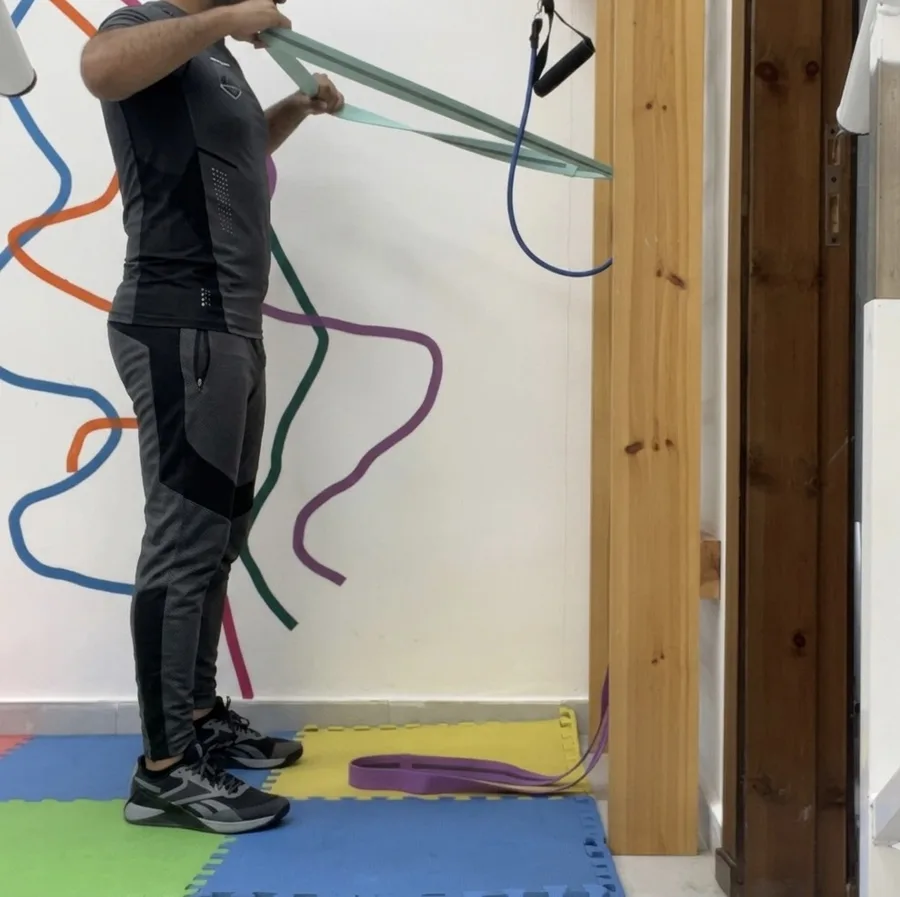
What is rhomboid pain?
Rhomboid muscle pain is pain or discomfort usually felt in the upper back, in the area between the shoulder blade and the spine.
It can come from strain or tightness in the rhomboid muscles, poor posture, or repetitive use of the shoulder and arm. In Arabic, pain or tightness in this part of the upper back is often called "al-wathab" — a popular term rather than a specific medical diagnosis.
Pain in this area can have several different causes, so a common name for it is not the same as a diagnosis.
What are the rhomboid muscles?
Two muscles in the upper back: rhomboid major and rhomboid minor. Together with other muscles around the shoulder, they stabilise the shoulder blade and control its movement. They help to:
- Pull the shoulder blade back towards the spine
- Hold the shoulder blade in its normal position
- Lift and rotate the shoulder blade
- Raise the arm and move it overhead
- Pull and throw
- Keep the shoulder stable as it moves
Symptoms
Symptoms vary with the cause and severity, and may include:
- Pain or aching between the shoulder blade and the spine
- Tenderness when the area is pressed
- A feeling of tightness or tension in the upper back
- Stiffness in the shoulder and upper back
- Sharp, stabbing twinges
- Pain that spreads to the neck or around the shoulder
- Restricted shoulder movement
- Arm fatigue with repetitive movements, especially overhead
- Arm weakness in some cases
- Clicking or grinding as the shoulder moves
Can it hurt when you breathe?
Some people notice more pain when they take a deep breath, because the rib cage and its muscles move as you breathe. But chest pain, or pain with difficulty breathing, should never be assumed to be "just the rhomboid" — get it assessed by a doctor if it is severe or unusual.
10 common causes
- Poor posture: long hours hunched over a computer or phone increase the load on the upper back and shoulder muscles.
- Strain or overuse: repeated pulling, heavy training, or a sudden jump in exercise intensity.
- Weakness or muscle imbalance: weak shoulder-blade stabilisers push extra load onto other muscles.
- A stiff upper (thoracic) spine: reduced movement here affects how the shoulder and shoulder blade move.
- Scapular dyskinesis: altered shoulder-blade movement or position increases load on the surrounding muscles.
- Sports injuries: in sports with repetitive arm movements — tennis, golf, rowing and some resistance training.
- Stress: tends to increase tension in the neck, shoulders and upper back.
- Sleeping position: awkward positions can press on the shoulder and surrounding muscles for hours.
- Heavy bags: regularly carrying a heavy bag on one shoulder.
- Other conditions: not all pain around the shoulder blade comes from the rhomboids — it can be linked to the shoulder joints, the spine, or other inflammatory and joint conditions.
That is why persistent, recurring pain — or pain with other symptoms — should be properly assessed to find the cause.
How to ease the pain
For mild cases caused by muscle strain, these first steps may help:
- Relative rest: temporarily avoid the movements that make it worse, but keep up light daily movement rather than long periods of complete rest.
- Cold or heat: cold can help early on after some injuries; heat is often soothing for tightness and stiffness.
- Pain relief: over-the-counter options such as paracetamol or ibuprofen may help some people — use them as directed by a healthcare professional or the packaging, and check for contraindications and interactions.
How physical therapy helps
Physical therapy is an important option when the pain persists, or when there is muscle weakness or a problem with how the shoulder and shoulder blade move. Your physical therapist will usually assess:
- Your posture
- Shoulder and shoulder-blade movement
- Mobility of the upper (thoracic) spine
- Strength of the shoulder and upper-back muscles
- How you move in daily activities and sport
- Where the pain is and what makes it better or worse
Then they build a program for your case, which may include:
- Pain relief: manual therapy, therapeutic exercise, and heat or cold depending on the stage.
- Better shoulder and upper-back movement: mobility and flexibility exercises to reduce stiffness.
- Strengthening: the muscles that stabilise and move the shoulder blade — including the rhomboids, trapezius and parts of the rotator cuff.
- Better shoulder-blade control: targeted exercises to improve its control and coordination with the arm.
- Posture: better positions for sitting, working, phone use and daily tasks.
- Manual therapy and massage: to reduce muscle tension and improve movement, as part of a complete program.
- Gradual return to activity: back to work or sport, increasing load appropriately to lower the risk of it coming back.
When should you see a doctor?
Most mild muscle pain improves with time and the right care, but see a doctor or specialist if the pain is:
- Severe or getting worse, or persistent and not improving
- Accompanied by clear arm weakness, or persistent numbness or tingling
- The result of a significant injury or fall
- Accompanied by chest pain, shortness of breath or difficulty breathing, or other unusual symptoms
Pain between the shoulder blades doesn't necessarily mean a rhomboid problem — a correct diagnosis is what points to the right treatment.
Summary
Rhomboid pain is one possible cause of pain between the shoulder blade and the spine, and may be linked to muscle strain, posture, repetitive movements, weakness or altered shoulder-blade movement. Physical therapy helps identify the cause, ease the pain, improve movement, build strength and get you back to daily life and sport gradually and safely.