What is tennis elbow?
Tennis elbow, also known as lateral epicondylitis (an overuse tendinopathy of the wrist-extensor muscles), is a condition caused by repeated overuse of the muscles and tendons around the elbow and forearm — through gripping, lifting, or repetitive movements. It produces pain that spreads from the outer elbow into the forearm and wrist, and makes everyday movements harder.
Despite the name, it is not limited to athletes. It often appears from the simplest repetitive daily activities of the hand and forearm.
What causes tennis elbow?
- Sport: racket sports (such as tennis) with an incorrect backhand technique
- Manual trades: painting, plumbing, carpentry, cooking, and playing musical instruments
- Daily life: using a manual screwdriver, chopping food, and heavy use of a computer mouse, keyboard or phone
- Overload: repetitive forearm and wrist movements that cause chronic strain
- Age: most common in adults between 30 and 50 years old
- Incorrect technique: using unsuitable sporting or work tools, or moving incorrectly
- Poor sleeping positions: placing the hand under the pillow while sleeping, especially with the elbow sharply bent
What are the symptoms?
The following symptoms may point to tennis elbow, especially when they recur or persist:
- Pain and burning: a mild pain that develops gradually on the outer side of the elbow and may intensify into burning or sharp pain, sometimes spreading to the forearm and wrist
- Weak grip: difficulty holding objects, carrying cups, or shaking hands
- Pain on moving the forearm: worse when bending or straightening the arm, turning a doorknob, or unscrewing
- Stiffness: a stiff feeling in the arm, especially when trying to straighten it in the morning
- Tenderness: sensitivity and pain when pressing on the outer elbow
- Night pain: the pain may persist or disturb sleep
A simple self-check
These quick checks may give you a clue, but they are not a diagnosis. Treat any positive result as a possible indicator — see a physical therapist to confirm.
- Locate the pain. Press on the outer side of the elbow. If the pain is clear and localized there, it *may* point to tennis elbow.
- Resistance test. Extend your arm in front of you and try to lift your hand upward (wrist extension) against light resistance from your other hand. If the pain increases at the outer elbow, that is a possible indicator.
- Grip test. Hold an object such as a bottle. If you feel pain in the same area of the elbow, that is a possible indicator.
If one or more of these provoke your pain, it is a sign to have it assessed — not a confirmed diagnosis. A short evaluation can confirm what is going on and rule out other causes.
How is tennis elbow treated?
Most cases improve without surgery. Treatment options include:
- Physical therapy — the foundation of recovery
- Occupational therapy
- Medical and interventional treatments
- Surgery, in the small number of resistant cases
The role of physical therapy
Physical therapy focuses on pain, strength and movement:
- Relieving pain and inflammation
- A gradual, progressive strengthening program suited to your case
- Exercises to improve flexibility and restore normal range of motion
- Education on correct hand use and avoiding faulty movements to prevent recurrence
With consistent treatment, most people recover without strong medication or surgical intervention.
The role of occupational therapy
Occupational therapy focuses on how you live and move without pain during your daily activities:
- Activity and work modification: identifying the movements that trigger pain (gripping, lifting, typing) and adjusting them to reduce strain on the elbow
- Tool recommendations: changing how you grip tools to reduce pressure
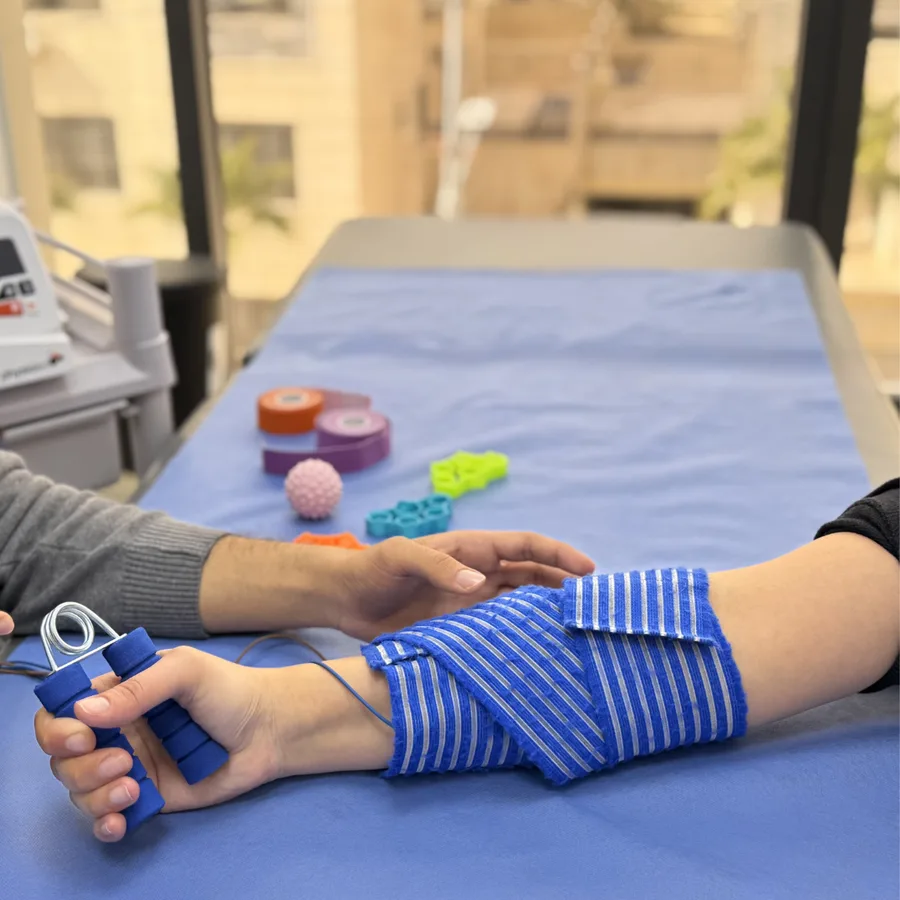
- Protection and support: recommending a brace or forearm strap to relieve pressure on the painful area
- Functional rehabilitation: restoring your ability to use the arm in daily tasks (opening doors, carrying objects) without pain
In short: physical therapy works on pain, strength and exercise, while occupational therapy focuses on how you carry out your daily activities without pain. At our clinic, the two work hand in hand.
Recovery timeline
- Mild cases: usually 6 weeks to 3 months
- Chronic cases: may extend to 6 months or more
Recovery is faster when treatment starts early and the home program is followed consistently.
When should you see a specialist?
Consider a professional assessment if:
- The pain persists for more than two weeks
- The pain has begun to affect your work or daily life
- There is clear weakness in the hand
Early assessment gives you the best chance of a smooth, complete recovery. Our team can confirm the cause of your elbow pain and build a plan around your goals — book a WhatsApp assessment whenever you are ready.