
Recovery after a stroke can be full of challenges — especially regaining coordination and control of movement. A patient may struggle to walk, keep their balance, or coordinate the hands and feet, because the brain areas that control movement have been affected.
These changes aren't only about weak muscles. A patient may regain some strength and still find it hard to move smoothly or with the right timing. Coordination exercises — chosen for the patient's condition and built into the rehab program — can help improve movement control and function, so daily activities become safer and more independent.
What is coordination?
Coordination is the nervous system's ability to organise and control body movements precisely and smoothly — coordinating muscles and joints and using sensory information to maintain posture and balance. Everyday activities like walking, reaching, turning, standing and climbing stairs rely on several functions working together:
- Activating muscles at the right moment
- Coordinating joints and limbs
- Shifting body weight from side to side
- Keeping the trunk stable and controlling posture
- Using sensory information to adjust movement
- Responding to changes in the environment and staying balanced
A stroke can affect the brain's ability to organise and combine these functions, making some movements less accurate, slower or harder.
How does a stroke affect coordination?
Problems vary with the location and severity of the stroke. The most common include:
- Difficulty grasping and releasing objects: because control of the hand and fingers is reduced.
- Poor eye–hand coordination: making reaching for or picking up objects harder.
- Unsteady walking: because coordinating the legs while keeping balance is difficult.
- Difficulty with fine movements: such as picking up small objects or using cutlery.
- Poor trunk–limb coordination: affecting sitting, standing and moving between positions.
- Difficulty starting a movement or changing direction: especially when walking or switching between tasks.
It's important to tell coordination problems caused by altered neural control apart from difficulties caused by weakness, altered sensation or stiff joints — the symptoms can look alike, but assessment and treatment depend on the cause.
Why timing changes — and why walking takes more concentration
Walking needs an organised sequence and well-timed muscle activity: foot placement, weight shifting, trunk movement, step timing and balance from one step to the next. After a stroke, this sequence can be affected:
- Slower walking speed
- Irregular steps or uneven step length
- Difficulty starting movement, and slower reactions to the surroundings
- Reduced control on one side of the body
- Needing more concentration to move
Walking, normally automatic, can need much more mental effort — so tasks that combine movement and attention become harder: walking while talking, turning while walking, crowded places, carrying things, and uneven ground. That's why a gait assessment looks beyond strength and speed, at step coordination, trunk control, weight shifting, balance and changing direction safely.
How it affects daily life
- Getting from sitting to standing
- Getting in and out of a car
- Going up and down stairs
- Dressing and using cutlery
- Picking up and moving objects
- Walking indoors and outdoors, and housework
Some difficulties can remain even after strength improves — regaining strength doesn't automatically restore the accuracy, timing and coordination of movement. That's why neurological rehab trains the functional movements themselves, not just isolated muscle strength.
Key coordination exercises after a stroke
The physical therapist chooses exercises based on the patient's movement, balance, strength, sensation and functional goals.
1. Reaching to targets
To improve eye–hand coordination and arm control: the patient sits on a stable chair (with back support if needed), light, safe objects are placed in front at suitable distances, and the patient reaches to touch or pick up a chosen object, returns to the start, and repeats towards different targets. Height and distance are adjusted, with support for the arm and trunk if control is limited.
2. Grasp and release
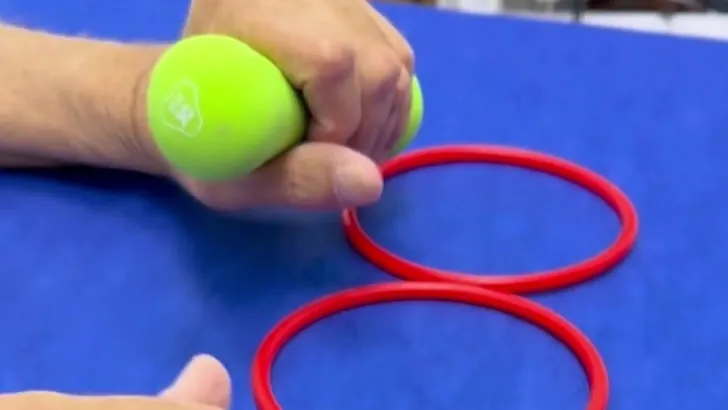
For fine control of the hand and fingers: the therapist chooses safe, light objects such as sponges or large soft balls; the patient practises grasping and releasing with control, then gradually moving objects between nearby spots. Fingers shouldn't be forced if there's pain or marked stiffness.
3. Two-arm coordination
Sitting in a stable position, the patient moves both arms together within a comfortable range if able — for example, sliding a towel forwards across a table and back. The focus is smoothness and control, not speed. If one arm is very weak, the therapist assists or modifies the exercise.
4. Trunk control and weight shifting
Sitting on a stable surface with feet supported, the patient shifts the trunk slightly forwards or to one side and returns upright; reaching to a nearby target can be added. Difficulty increases gradually, avoiding leaning beyond safe control — especially with severe balance problems or neglect of one side. (Read: trunk stability and balance after a stroke)
5. Leg coordination
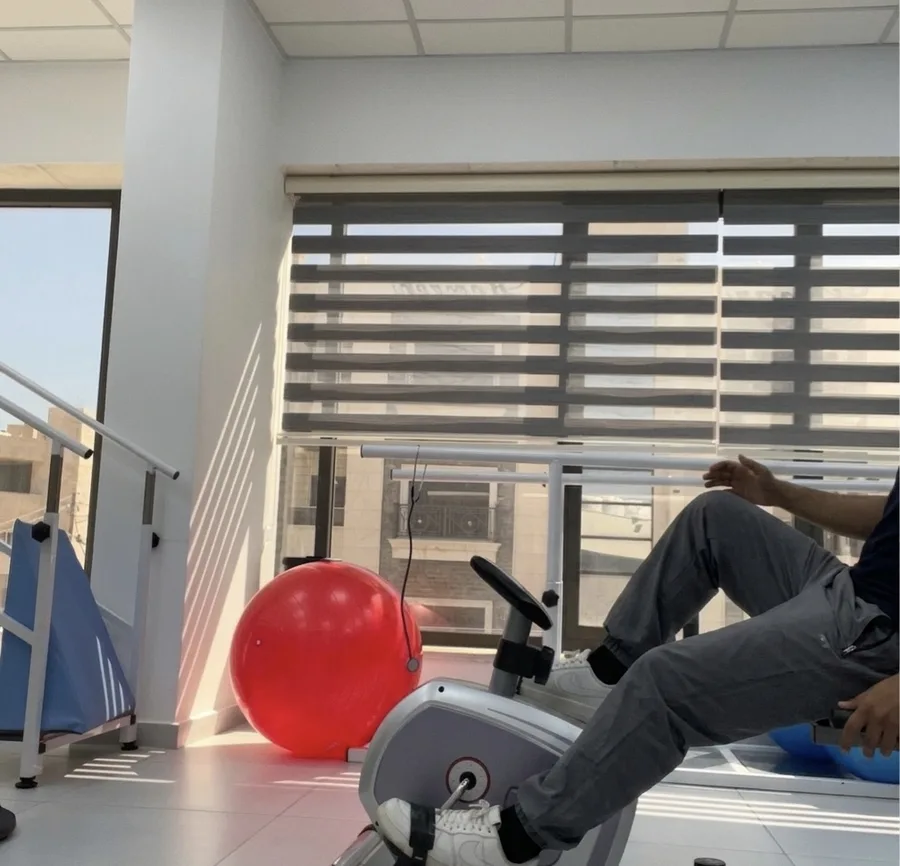
Examples: sliding the foot forwards and back while sitting, lifting the foot and placing it on a marked spot, alternating leg movements within a safe range, and placing the foot accurately on a target. These are chosen carefully with severe weakness or altered sensation, and not done standing without suitable support.
6. Sit-to-stand
On a stable chair of suitable height, the patient leans slightly forwards, then pushes up to standing with the therapist's help if needed, and sits back down slowly with control — focusing on sharing weight between the legs. It isn't advised independently if the patient can't stand safely or is at risk of falling.
7. Coordination while walking
For patients who can walk, with or without help, training may focus on foot placement, step length and timing, weight shifting, trunk–leg coordination, starting, stopping and turning, and walking a suitable distance while keeping good movement quality. A walker or crutches may be used based on the assessment. Speed isn't the only goal — quality, safety and control come first. (Read: gait training after a stroke)
The role of physical therapy
The program starts with a full assessment of strength, joint range, sensation, balance, trunk control, coordination and functional ability. The physical therapist then sets realistic goals and a plan that may include:
- Targeted functional training
- Balance and postural-control exercises, and weight-shift training
- Strengthening the muscles needed for movement
- Gait training and transfers between positions
- Structured repetition of target movements
- Aids or treatment techniques where needed
Effective training uses tasks linked to the patient's goals, repeated enough, with difficulty adjusted as performance improves. Some patients may also need occupational therapy for hand skills and fine daily tasks.
Progressing exercises gradually
Exercises should be challenging enough to drive motor learning but still possible safely and with reasonable control. Ways to progress:
- Improve accuracy before speed
- Adjust distance or object size
- Increase repetitions as endurance allows
- Move from simple tasks to more complex functional movements
- Reduce assistance as performance becomes safer
- Add challenges such as changing direction or combining movements, when appropriate
A patient who can't yet sit steadily needs a very different program from one who walks but struggles to turn or climb stairs.
Safety guidelines
- Do the first sessions under a physical therapist's supervision if there's clear weakness or a risk of falling
- Use a stable chair or suitable support for sitting and standing exercises
- Clear obstacles from the training area
- Avoid fast or complex movements before the basics are mastered
- Stop if there's new pain, dizziness, unusual shortness of breath or a sudden decline in movement
If new or sudden neurological symptoms appear — such as new weakness in a limb, slurred speech or facial drooping — seek emergency medical help immediately.
Frequently asked questions
Can coordination improve after a stroke?
It can improve for some patients with the right rehabilitation and repeated, purposeful practice. How much depends on the severity and location of the stroke, functional ability and general health.
Does coordination improve as strength improves?
Not necessarily. Strength can improve while timing, accuracy or coordination problems remain, so dedicated coordination and balance work may be needed alongside strengthening.
How often should coordination exercises be done?
It depends on the patient's condition, endurance, level of assistance and goals. The physical therapist sets the dose and adjusts it to the response.
Can they be done at home?
Some can, once the physical therapist has assessed the patient and chosen safe exercises. Standing, walking and turning exercises may need supervision or support to reduce the risk of falls.
What's the difference between coordination and balance?
Coordination is the body's ability to organise the timing and accuracy of movement; balance is the ability to keep or regain stability while moving. They're linked — walking and changing position need both.
Summary
Coordination is a key part of regaining movement after a stroke. A stroke can affect the accuracy and timing of movement, walking, turning, weight shifting and daily activities — even when strength improves. A careful assessment and a physical therapy program built for each patient help choose the right exercises and develop movement control, balance and function step by step. At Back On Track, we focus on assessing each patient's needs and building a rehab plan around their abilities and goals, to support movement, independence and quality of life after a stroke.